Pizza Place Cheyenne Suggestions for Cheesy Indulgence
@louismloa757
Finding the right pizza place Cheyenne diners will actually want to return to is less about chasing hype and more about knowing what kind of meal you want. Pizza is simple on paper, dough, sauce, cheese, heat, but the gap between average and memorable is huge. One pie arrives with a crust that tastes alive, charred in the right spots and still tender in the middle. Another shows up as a heavy round of bland dough with melted cheese doing all the work. If you are in Cheyenne and trying to decide where to spend your appetite, that distinction matters.
Cheyenne has the kind of dining rhythm that rewards practical choices. Some meals are built around family takeout after a long workday. Some are tied to game nights, road-trip stops, downtown evenings, or cold-weather cravings when only a hot, stretchy, unapologetically cheesy pizza will do. The best suggestion is rarely just “go anywhere and order pepperoni.” A smart pick depends on the room, the oven style, the house cheese blend, and whether the kitchen understands restraint.
That last point is underrated. Good pizza, especially the cheesy kind, needs balance. Too little cheese and the whole pie feels stingy. Too much and the toppings slide off in one molten blanket, leaving a soupy center behind. A reliable pizza place knows where indulgence stops being pleasure and starts becoming a structural problem.
What matters more than the menu photo
Most people begin with the obvious signals. They look at online photos, count the stars, maybe skim a review or two for phrases like “best in town” or “always fresh.” Those signals help, but they do not tell you enough. Pizza rewards close reading.
A strong local shop usually gives itself away in small ways. The crust has its own identity instead of acting as a delivery vehicle for cheese. The sauce tastes seasoned rather than sweet and anonymous. The mozzarella does not break into oily puddles after three minutes on the table. If the menu offers several crust styles or a few specialty pies that sound thought through rather than randomly assembled, that is often a good sign. A kitchen that cares about pizza tends to care about combinations.
When people search for a pizza place Cheyenne locals trust, they often mean one of two things. They either want consistency, the place that never lets the family down on a Friday night, or they want payoff, the place that justifies a bigger bill because the pizza actually feels crafted. Those are not always the same shop. One may excel at large carryout orders, fast timing, and familiar flavors. Another may be better for dine-in, slower pacing, and a pie with a blistered crust and stronger cheese character.
That difference is worth noticing before you order. A perfectly serviceable chain-style pie and a well-made house pie serve different jobs. Both can satisfy. Only one usually becomes the meal people talk about on the drive home.
The cheese question, which is really several questions
Cheesy indulgence sounds simple until you break it apart. Do you want stretch, richness, browned edges, salt, smoke, or that lush dairy sweetness that comes from fresh mozzarella? Different pizza styles handle cheese in different ways, and that can shape your entire experience.
A thicker pan or deep-dish style often supports heavier cheese loads without collapsing. A thinner New York style slice can handle extra cheese too, but only if the oven heat is high enough to set the top properly. Hand-tossed styles live in the middle, which is why they are so common. They forgive a lot of variation and tend to please groups with mixed preferences.
If your goal is real indulgence, ask how the shop handles its cheese. A blend of mozzarella with provolone or parmesan often delivers more flavor than “extra mozzarella” alone. Extra cheese sounds like the obvious luxury move, but it can mute the sauce and weigh down the crust. In practice, one of the smartest orders is often a pie with the house blend, then one or two toppings that bring salt or contrast, such as pepperoni, Italian sausage, mushrooms, roasted peppers, or even a little heat from jalapeño.
I have seen plenty of diners order the heaviest pie on the menu and then wonder why two slices feel exhausting. The best cheesy pizzas are rich without becoming dull. You want pull, not fatigue.
Reading a pizza place before you commit
If you are choosing a pizza place in Cheyenne for delivery, carryout, or dine-in, a few details tell you a lot about what the meal will be like:
- A short specialty menu often beats a sprawling one with every topping under the sun.
- House-made dough or references to proofing time usually signal better crust texture.
- Photos that show browning on the cheese and rim are more promising than pale, glossy tops.
- Appetizers and salads that seem intentional, not obligatory, suggest a kitchen with standards.
- If customers mention consistency more than novelty, that usually means the shop has its basics under control.
Those clues are not foolproof, but they are practical. Pizza is repetitive by nature. Shops that are good at repetition tend to reveal it in the details.
Best fits for different pizza moods
One reason people get disappointed with pizza is that they ask the wrong place to do the wrong job. A sports-bar pizza can be excellent with a cold drink and a noisy room, yet feel underwhelming if you expected a carefully fermented artisan crust. A family-focused takeout spot may be exactly right when you need a large order, breadsticks, and broad kid appeal. The trick is matching your expectation to the kitchen.
For a quiet dinner, look for a place where the pie itself is the event. You want a dough-forward menu, a smaller set of toppings, and an atmosphere that lets you eat slowly. If you are feeding teenagers, a team, or hungry friends after an afternoon out, capacity matters more. In that case, speed, portion size, and dependable crowd-pleasers probably beat nuance.
Cheyenne’s location and lifestyle shape those choices more than people sometimes admit. This is a place where weather can swing your mood, where convenience matters, and where comfort food has to work hard on cold evenings. A truly satisfying pizza place understands that the meal is not just food. It is shelter, reward, and social glue. That is why the same person might want a crisp, balanced margherita one weekend and a massive meat-loaded pie with extra cheese the next.
Neither craving is wrong. They just require different kitchens.
Crust decides whether the cheese gets to shine
Cheese gets the attention, but crust decides the ceiling of the experience. If the crust is lifeless, no amount of melted mozzarella can save it. A great crust gives you contrast: crisp exterior, chew inside, enough strength to hold toppings, enough flavor to stand on its own.
Thin crust works beautifully for people who want more direct contact with cheese and toppings. Every bite feels immediate. The trade-off is that a heavily loaded thin pie can lose its structure fast, especially during delivery. If the restaurant is far from your house, a thin pie may arrive less crisp than it left the oven.
Hand-tossed crust is the safest middle road. It usually survives transport better, appeals to more people, and handles cheesy toppings without becoming dense. Pan-style crust is the move when indulgence is the whole point. You get a softer, richer bite, often with caramelized cheese along the edges if the kitchen knows what it is doing. The downside is pace. Pan pizza can feel filling very quickly. It is excellent for splitting, less ideal if everyone wants to sample multiple items.
A reliable pizza place Cheyenne customers recommend tends to understand these trade-offs rather than pretending one crust style fits every appetite.
Toppings that help, not just decorate
A pizza overloaded with toppings often tastes smaller than a simpler one. That sounds backward until you eat enough bad combinations. Toppings should support the cheese and sauce, not bury them.
Pepperoni remains popular for a reason. It brings salt, fat, and crisped edges, which make melted cheese taste even richer. Sausage can do similar work, though it needs good seasoning or it just adds bulk. Mushrooms are excellent when cooked properly because they add savoriness without stealing focus. Roasted garlic can be fantastic in moderation. Onions, especially if lightly caramelized, offer sweetness that cuts through dairy richness.
The biggest mistake is stacking multiple wet toppings on a pie and then adding extra cheese. Tomatoes, pineapple, fresh mozzarella, and watery vegetables can flood a crust if the kitchen does not account for moisture. This is where experienced pizza makers earn their reputation. They know when to prebake, when to go lighter on sauce, and when to warn you that your custom order may not behave well.
That kind of honesty is worth paying for. A place that will guide you away from your own worst topping instincts usually cares about the final product.
Ordering for the occasion
Not every cheesy pizza has to be maximalist. Some of the most satisfying orders are calibrated to the moment. A late lunch for two calls for a different pie than a family movie night or a group dinner after a long day.
Here are a few combinations that tend to work in real life:
- For two adults, a medium hand-tossed pie with one meat and one vegetable usually lands better than a giant overloaded specialty pizza.
- For a family table, one classic pie and one adventurous pie almost always beats trying to satisfy everyone with a single compromise order.
- For delivery on a cold evening, slightly thicker crust travels better and stays more satisfying by the time it reaches the door.
- For pure cheese lovers, ask about the house blend before ordering extra cheese, because a stronger blend often gives better flavor than extra volume.
- For leftovers, avoid delicate greens and watery toppings, since reheated slices improve when the original pie was built with restraint.
Those are not hard rules. They are the kind of adjustments people make after enough good meals and enough disappointing ones.
Dine-in versus takeout changes the whole experience
Pizza is one of the foods most affected by the clock. Five minutes can be the difference between airy and heavy, crisp and limp, vivid and merely warm. That means the format matters almost as much as the recipe.
Dine-in usually gives you the best version of the restaurant’s work. The crust holds its texture. The cheese is still active and elastic. The aromas are at full volume. If the place has a decent room and attentive staff, that first pie arriving at the table can feel generous in a way that delivery rarely matches.
Takeout is often the smartest compromise in Cheyenne, especially if you live close to the restaurant or can pick up the pie yourself. It cuts out some delay and tends to preserve crust quality better than third-party delivery. If you care about texture, carrying the box home yourself can be a surprisingly meaningful upgrade.
Delivery wins on convenience, obviously, but it asks more of the pizza. Some styles survive the trip better than others. Thick-crust, pan, and well-structured hand-tossed pies are usually safer bets. Ultra-thin crust and lightly topped artisan-style pizzas can lose their edge in transit, especially in bad weather or across longer routes.
If cheesy indulgence is your mission, and you want that glorious first-slice stretch, eat on site or pick it up. The pizza will thank you.
The side dishes that separate average shops from serious ones
Nobody should judge a pizza place solely by its wings, salad, or breadsticks, but sides tell you a lot about standards. A kitchen that tosses together a limp side salad or sends out flavorless bread often approaches pizza with the same shortcuts. On the other hand, a place with crisp romaine, balanced dressing, or properly baked garlic knots usually pays attention to seasoning, timing, and ingredient handling.
This matters more than it seems. Rich pizza benefits from contrast. A sharp salad, roasted vegetables, or even a thoughtfully made dipping sauce can keep the meal from becoming one-note. If you are ordering for a group, these supporting items buy flexibility. They help lighter eaters and give the table a break between slices.
Dessert can be revealing too. A pizza place that does one dessert well, maybe cinnamon knots, cannoli, or a simple cookie skillet, often understands that comfort food should finish strong, not just stop when the boxes are empty.
Price, portions, and what “worth it” actually means
Pizza pricing can get slippery. A lower sticker price is not always a better value if the pie is thin, under-topped, or forgettable. On the other hand, an expensive specialty pizza has to justify itself with ingredient quality, execution, or both. Otherwise you are paying extra for menu adjectives.
Value is about ratio: how much pleasure, how much satisfaction, how many decent leftovers, and how little regret. A well-made medium pizza can beat a mediocre large one on every count. I would rather pay a bit more for a pie with a real crust and balanced toppings than save five or six dollars on something that feels industrial by the second slice.
If you are scanning menus for the best pizza place Cheyenne has for your budget, look beyond size alone. Consider whether the place offers lunch slices, half-and-half specialty options, family meal deals, or a house pie that performs above its price point. Sometimes the smartest order is the restaurant’s simplest one.
The signs of a place you will reorder from
The first time you try a new pizza shop, you are mostly testing for competence. Was the crust cooked through? Did pizza place cheyenne the toppings make sense? Did the cheese taste fresh? By the second or third order, a different question takes over: does this place understand what its customers need?
The restaurants that build loyal followings tend to get the fundamentals right repeatedly. Orders are accurate. Pickup times are realistic. The pie looks like the photo, or better. Staff can explain the differences between crusts or steer you toward combinations that travel well. Even small courtesies, cutting square for sharing, packing sauces correctly, warning you when a certain pie runs longer, create trust.
Trust matters because pizza often enters the scene when people are tired, hungry, social, or celebrating. It is not just another dinner. It is the fallback meal after a hard day, the easy answer for guests, the reward after a long week. A dependable pizza place earns space in a routine precisely because it removes friction.
And when that dependable place also knows how to handle cheese generously, with restraint where needed and boldness where it counts, it becomes more than convenient. It becomes the answer to a craving.
Choosing your Cheyenne pizza lane
If you are narrowing down a pizza place Cheyenne search, start by being honest about what kind of indulgence you want. Do you want a classic, familiar pie with enough mozzarella to satisfy everyone at the table? Do you want a more crafted pizza with a stronger crust identity and smarter topping pairings? Do you want speed, leftovers, atmosphere, or maximum gooey comfort on a cold night?
Once you know that, the right choice gets clearer.
The best cheesy pizza experiences are not necessarily the heaviest or the most expensive. They are the ones where each part of the pie supports the others. The crust has character. The sauce has purpose. The cheese is abundant but controlled. The toppings bring contrast instead of clutter. The slice bends without collapsing. You reach for the next piece because it tastes good, not because you are trying to get through it.
That is the standard worth chasing. In a city like Cheyenne, where comfort food has to deliver and casual meals often carry more importance than people admit, pizza should feel both easy and excellent. When you find the place that can do that, you stop browsing and start ordering.
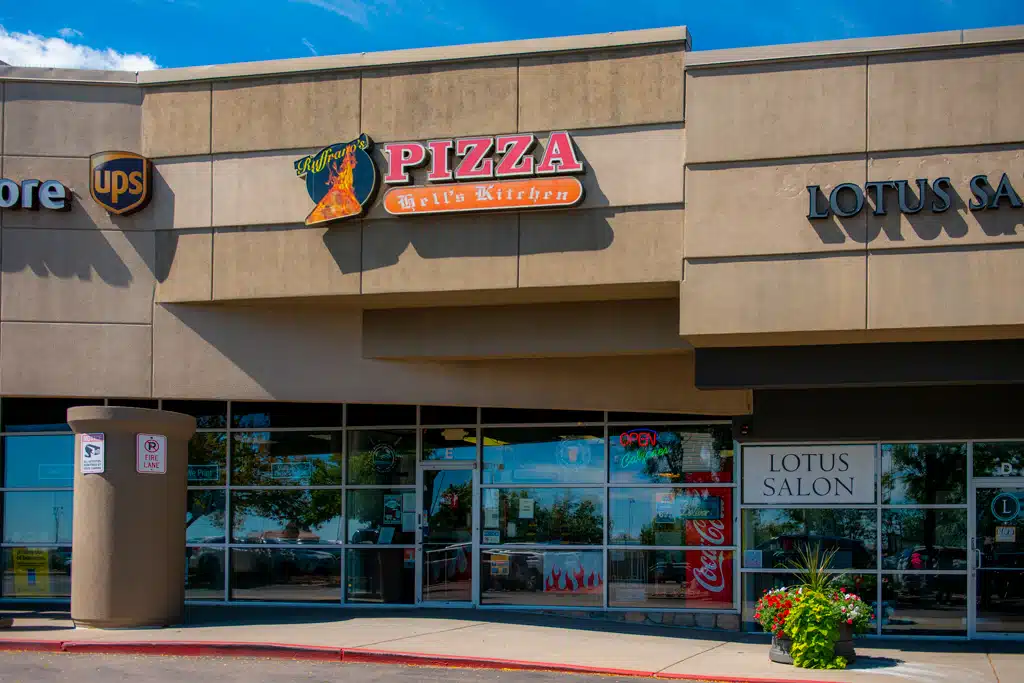
Ruffrano's Hell's Kitchen Pizza Cheyenne
Address: 1670 E Cheyenne Mountain Blvd, Colorado Springs, CO 80906
Phone number: +17195764355
FAQ About Pizza Place Cheyenne
What's the most popular pizza place?
The "most popular" pizza place depends on whether you measure by location count, total sales, or customer favorite status.
What is the 2 pizza rule?
The two-pizza rule is a management principle made popular by Amazon founder Jeff Bezos. It states that a team or meeting should never be larger than what can be fed with two large pizzas—typically translating to a group of 5 to 10 people (or roughly 6 to 12 people depending on appetites).
Is 2 pizzas enough for 10 people?
No, 2 pizzas are usually not enough for 10 people.