The Best Toppings to Order at a Pizza Place in Cheyenne
@louismloa757
Choosing pizza toppings sounds simple until you are standing at the counter, half-hungry, trying to build a pie that works for everyone at the table. That decision gets even more interesting in a place like Cheyenne, where people tend to appreciate food that feels generous, balanced, and worth the price. A great pizza does not come from piling on every topping available. It comes from understanding how each ingredient behaves in the oven, how flavors build on one another, and when restraint gives you a better slice.
At a good pizza place in Cheyenne, the best topping order usually reflects the setting as much as the menu. Cold weather leans people toward richer combinations. Group dinners call for broader appeal. Late lunches often favor something lighter and sharper, especially if you still have a full afternoon ahead. The trick is not asking which topping is best in the abstract. The better question is which topping combination will eat well, hold its texture, and still taste good by the third slice.
What makes a topping worth ordering
People often rank toppings by personal preference alone, but that misses the practical side of pizza. The best toppings are the ones that improve the whole pie. They should add flavor without making the crust soggy, contribute texture without turning leathery in the oven, and support the cheese and sauce rather than bury them.
Pepperoni remains popular for a reason. It curls, crisps, and releases seasoned fat that seasons the surrounding cheese. Mushrooms, when handled properly, bring earthiness and moisture, but too many can water down the center. Sausage adds heft and spice, yet it needs an acidic partner, such as onions or peppers, or the pie can feel heavy after a couple of bites.
That balance matters even more when you are ordering for a family or a group of coworkers. A pizza that looks impressive on paper can eat like a chore if every topping is salty, rich, or wet. The best orders create contrast. You want fat against acid, crisp edges against soft cheese, sweetness against heat.
Pepperoni still sets the standard
If you want the safest high-quality order at almost any pizza shop, start with pepperoni. Not because it is predictable, but because it reveals a lot about how the kitchen handles the basics. A good pepperoni pizza should have slices that blister at the edges, enough rendered spice to flavor the cheese, and a crust sturdy enough to support it all.
In Cheyenne, where a lot of people want a pizza that feels satisfying in a straightforward way, pepperoni hits the mark. It works for lunch, dinner, game nights, and takeout. It also pairs well with almost everything, which makes it the ideal base if you want to customize without getting too risky.
The only caution is excess. There is a point where extra pepperoni stops helping. Once the meat covers nearly every inch of cheese, the pie can turn greasy and overly salty. In practice, pepperoni is at its best when you let it dominate the flavor without completely taking over the surface.
Sausage belongs on more pies than people think
Sausage is one of the most misunderstood toppings because it varies so much from one shop to the next. Some places use small crumbles with fennel and black pepper. Others lean toward a milder style. Either way, sausage gives a pizza depth that pepperoni does not. It tastes more savory, more rounded, and often more substantial.
This is especially useful when you are ordering on a colder evening and want something that feels like an actual meal, not just a snack in slices. Sausage also holds up well in delivery. Even after a twenty-minute drive home, it tends to retain flavor and texture better than more delicate toppings.
Where people go wrong is pairing sausage only with other heavy ingredients. Sausage and bacon can be good, but it is rarely the best version of either topping. Sausage and onions, or sausage and roasted peppers, usually give you a smarter pizza place cheyenne pie. The vegetables cut the richness and brighten the finish, so each slice feels complete instead of overloaded.
Mushrooms bring more value than flash
Mushrooms rarely get top billing, yet they may be the most useful supporting topping on the board. Their strength is not boldness. It is integration. Mushrooms absorb surrounding flavor, reinforce the savoriness of the cheese, and add body to the bite without competing for attention.
That makes them ideal in a mixed-topping pie. If you are ordering from a pizza place in Cheyenne for a table with different tastes, mushrooms can bridge the gap between meat lovers and people who want a little more complexity. They pair cleanly with sausage, pepperoni, onions, spinach, and even black olives if the shop uses them with a light hand.
The caveat is moisture. Too many mushrooms can release enough liquid to soften the center, especially on thinner crusts. A well-built mushroom pizza usually works best when the topping is part of a two- or three-item combination rather than the entire concept.
Onions do more work than most customers realize
Onions are one of the smartest toppings you can add if you want a pizza to taste more vivid without adding extra heaviness. In the oven, onions soften and sweeten, but they still retain enough sharpness to cut through cheese and meat. That single quality makes them more versatile than a lot of trendier options.
Red onion can add a bit more bite, while white or yellow onion usually melts into the flavor of the pie. Either way, onions improve balance. They are especially effective with sausage, bacon, and Canadian bacon, where they stop the pizza from leaning too far into pure salt and fat.
There is also a budget angle here. If you are paying for a custom pizza and trying to get the most impact out of each add-on, onions usually return more flavor per topping than something milder like extra cheese. Extra cheese can make a pie richer, but onions make it more complete.
Jalapeños for people who want real contrast
A lot of spicy pizza orders fail because they rely only on crushed red pepper after baking. That gives you heat, but not much character. Jalapeños bring both. They add freshness, acidity, and a bright kind of spice that wakes up every other ingredient.
Jalapeños work particularly well on richer pizzas, especially those with sausage, pepperoni, or chicken. They also make sense in Cheyenne, where hearty food can benefit from a cleaner, sharper edge. On a cold day, a warm slice with jalapeños has a way of tasting more lively than a standard meat pie.
The main judgment call is quantity. A few slices distributed across the pie can transform it. Too many can dominate the entire experience and wipe out the flavor of the sauce and cheese. If you want heat without turning dinner into a challenge, ask for a moderate amount and let the peppers support the pie rather than headline it.
Bacon is best when used with discipline
Bacon sounds like an automatic win, but it is surprisingly easy to misuse on pizza. When it is crisp and scattered sparingly, bacon adds smoky flavor and crunch that no other topping delivers. When there is too much of it, the pizza can become one-note, salty, and dry at the edges.
The best role for bacon is as an accent. Pair it with onions for balance, or with chicken and a barbecue base if the shop does that style well. Bacon also works with jalapeños when you want smoke, salt, and heat in the same bite. What it usually does not need is another strong cured meat alongside it. Bacon and pepperoni can be fun, but one often blunts the other.
This is one of those toppings where less really is more. A pizza should not taste like breakfast scraps on bread. It should taste composed.
Green peppers deserve a second look
Green peppers are often treated like filler, but on the right pie they are one of the best texture toppings available. They hold some crunch in the oven, add a slight bitterness, and keep rich pies from feeling sleepy. If your usual order is heavy on meat, green peppers can make the same pizza feel lighter and better structured.
They are especially strong with sausage, onions, and mushrooms, a combination that has stayed popular for decades because it makes sense. Each topping fills a different role. Sausage brings depth, onions bring sweetness and bite, mushrooms add savoriness, and peppers keep the whole thing from collapsing into softness.
For customers who think green peppers are boring, the issue is often proportion, not the ingredient itself. Used thoughtfully, they add more than they take.
Pineapple is not the problem, poor pairing is
Pineapple still divides people, but the real question is not whether fruit belongs on pizza. It is whether the rest of the pie is built to support it. Pineapple needs salt and either smoke or heat. Without that, it can taste disconnected, like a sweet topping dropped onto a savory base.
The classic ham-and-pineapple approach can work, though it often benefits from an extra element. Jalapeños sharpen it. Bacon deepens it. Even red onions can give it more shape. The best pineapple pizzas do not aim for sweetness alone. They aim for contrast.
In a place where people often want a filling, satisfying meal, pineapple may not be the first topping that comes to mind. But for takeout on a busy weeknight, when you want something that tastes a little brighter and less heavy than a meat-packed pie, it can be the right call.
Specialty combinations that usually outperform build-your-own chaos
Most disappointing custom pizzas fail for one of two reasons. Either they mix too many bold toppings that fight one another, or they combine several wet ingredients and wreck the crust. Specialty pizzas, when they are designed by a competent kitchen, often avoid both mistakes. They are built around combinations that bake well and finish cleanly.
That does not mean you should always default to the house special. It does mean there is wisdom in combinations that have survived on menus for years. A meat-forward pizza with one or two vegetables tends to deliver more consistent results than a seven-topping custom order. So does a white pizza with a restrained topping set, especially if the shop knows how to manage garlic, cheese, and oil.
If you are ordering from a pizza place in Cheyenne for a group, a smart move is often to get one pie that is broadly familiar and another that has a little more personality. That usually satisfies both the cautious eaters and the adventurous ones without forcing a compromise pie that pleases no one.
How crust and topping choice affect each other
Toppings do not exist independently of crust. This is where experienced ordering beats impulse ordering. Thin crust handles restrained toppings well, especially pepperoni, onion, mushroom, and jalapeño. It rewards balance and punishes excess. Put too many wet or heavy ingredients on it, and the center folds under its own weight.
A thicker crust can support more meat and cheese, but that does not mean it should. It simply gives you more margin. If you like sausage, bacon, or multiple proteins, thicker crust offers insurance. It also tends to make vegetable toppings feel less pronounced, so you may want stronger flavors such as onions or jalapeños rather than milder additions.
Cheese level matters too. Extra cheese can be excellent on a pepperoni or jalapeño pie because it cushions sharper flavors. On a mushroom-heavy pizza, it can smother the subtler notes. When people say a pizza was “too much,” it is often not because of one topping. It is because the crust, sauce, cheese, and topping load were all working at maximum intensity.
Ordering for different occasions
The best topping order changes with the moment. For a quick lunch, a two-topping pie often beats a loaded one. Pepperoni and mushroom, sausage and onion, or bacon and jalapeño each gives you enough interest without slowing you down. For dinner with family, broader combinations tend to win. Pepperoni with green peppers is easy to share. Sausage with onions and mushrooms usually keeps adults happy and still feels familiar enough for less adventurous eaters.
For parties, avoid toppings that become divisive or messy in large quantities. Too much pineapple, too many olives, or an overbuilt spicy pie can leave half the box untouched. Group pizza works best when each slice is easy to say yes to.
Late-night orders are their own category. That is when richer toppings make the most sense, especially sausage, pepperoni, and bacon in careful proportion. People want comfort at that hour, but even then, a little onion or pepper often improves the pie more than another layer of meat.
The case for keeping it to three toppings or fewer
There is a point where choice stops helping. In most shops, the sweet spot is two or three toppings. That gives you enough complexity to make the pizza interesting while still allowing the dough, sauce, and cheese to contribute something.
This matters because great pizza is not just a platform for toppings. The crust should still have flavor. The sauce should still register. The cheese should still stretch and brown rather than merely serve as glue. When every square inch is covered with competing ingredients, you lose those fundamentals.
A restrained order also tends to travel better. Delivery and carryout introduce a little steam, a little settling, and a little softening on the ride home. Simpler pizzas usually survive that trip with more dignity.
The strongest orders to consider
If you want dependable choices that usually perform well, certain combinations stand out again and again. Pepperoni with jalapeños gives you crisp spice and clean heat. Sausage with onions creates a rich, balanced pie that feels especially right on colder nights. Mushroom and onion is one of the best non-flashy combinations on any menu because it lets the cheese and crust stay in the conversation. Bacon with jalapeños works when you want bold flavor but still need contrast. Ham or Canadian bacon with pineapple and a little added heat can be excellent when you are in the mood for something brighter.
None of those combinations are exotic. That is part of the point. The best toppings at a pizza place in Cheyenne are not necessarily the most unusual. They are the ones that make sense together, bake cleanly, and leave you wanting another slice instead of reaching for a glass of water to recover.
Why smart topping choices matter more than endless options
A long topping list can create the illusion that more choice means better pizza. In practice, good ordering is about judgment. You are building flavor, managing moisture, and deciding what kind of meal you want. That is as true in Cheyenne as anywhere else, maybe more so, because people tend to value food that is straightforward, satisfying, and well made.
When you find a shop with solid dough, balanced sauce, and a hot oven, the topping decision becomes the final adjustment rather than the whole strategy. Lean on ingredients that bring contrast, respect the crust, and do not mistake abundance for quality. That is how you end up with a pizza that tastes intentional, whether you are grabbing a solo lunch, feeding a family, or picking up dinner for a crowd.
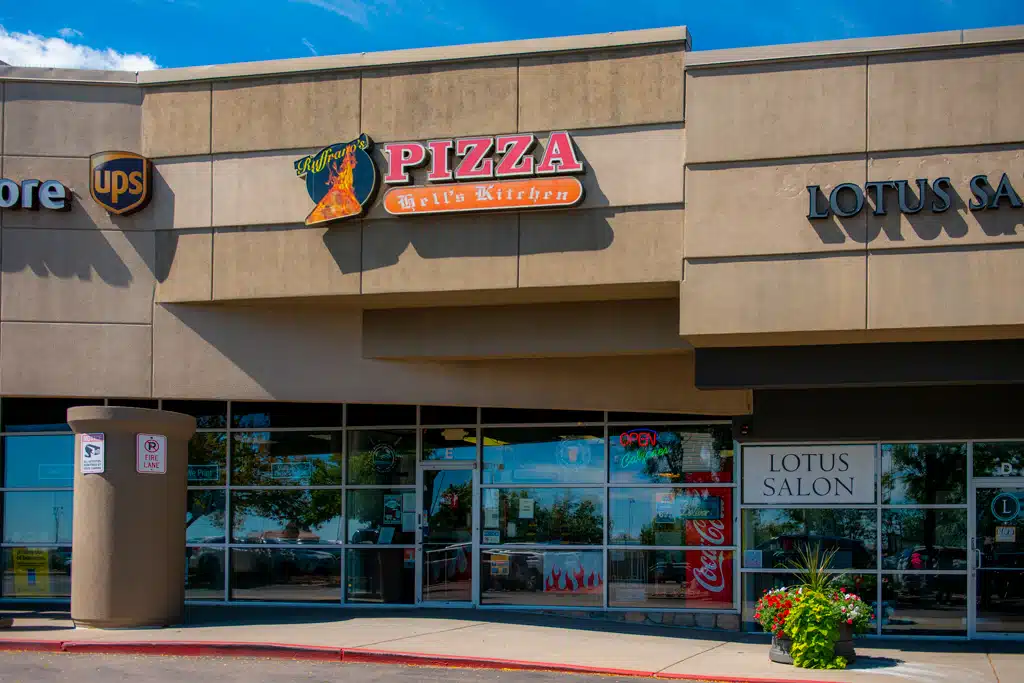
Ruffrano's Hell's Kitchen Pizza Cheyenne
Address: 1670 E Cheyenne Mountain Blvd, Colorado Springs, CO 80906
Phone number: +17195764355
FAQ About Pizza Place Cheyenne
What's the most popular pizza place?
The "most popular" pizza place depends on whether you measure by location count, total sales, or customer favorite status.
What is the 2 pizza rule?
The two-pizza rule is a management principle made popular by Amazon founder Jeff Bezos. It states that a team or meeting should never be larger than what can be fed with two large pizzas—typically translating to a group of 5 to 10 people (or roughly 6 to 12 people depending on appetites).
Is 2 pizzas enough for 10 people?
No, 2 pizzas are usually not enough for 10 people.